Please report any broken links or trouble you might come across to theWebmaster Please take a moment to let us know so that we can correct any problems and make your visit as enjoyable and as informative as possible.

NavSource Online: Mine Warfare Vessel Photo Archive

Keokuk (AKN-4)
ex
Keokuk (CM-8) (1942 - 1943)
Keokuk (AN-5) (1941 - 1942)
Keokuk (CMc-6) (1941)


Call sign:
Nan - William - Able - William (AKN-4)
NWAW


Call sign:
Nan - Uncle - Fox - Uncle (AN-5/CM-8/CMc-6)
NUFU

Awards, Citations and Campaign Ribbons


Precedence of awards is from top to bottom, left to right
Top Row - American Campaign Medal
Bottom Row - Europe-Africa-Middle East Campaign Medal (1) - Asiatic-Pacific Campaign Medal (3) - World War II Victory Medal


Casualties

Purple Heart (16 KIA, 1 MIA, 1 DOW, 44 WIA) Iwo Jima 21 February 1945
One additional man was lost earlier and remains on duty:
F1c John (n) Feranec (725 41 09) V-6, USNR, North Pacific, 17 April 1944


Keokuk Class Minelayer:
  • Built by William Cramp and Sons, Philadelphia, PA (YN 421)
  • Laid down, 20 April 1914
  • Launched, 22 September 1914
  • Delivered to Florida East Coast Railway Co., New Haven, CT, as railroad ferry Henry M. Flagler, December 1914
  • Designated ID-1585 during World War One, but not used
  • Designed to carry railcars from Key West, Florida to Havana, Cuba
  • Laid up at Port Everglades, FL, 1939
  • Sold to Isbrandtsen SS Co., New York, NY, for use as a train ferry between Norfolk & Baltimore, renamed Columbia Heights, April 1941
  • Acquired by the Navy while under repair at Baltimore, 28 July 1941
  • Intended for conversion to Coastal Minelayer, to be designated CMc-6
  • Reclassified Net Layer AN-5 and renamed Keokuk, 15 August 1941
  • Commissioned, 28 February 1942
  • Laid defensive minefields at Trindad and Key West with Monadnock (CMc-4) and Miantonomah (CMc-5), April 1942
  • Reclassified as Minelayer CM-8, 18 May 1942
  • Laid defensive minefield with Monadnock and Miantonomah off Cape Hatteras, 22-25 May 1942
  • Under repair at Fletcher's Shipyard, Hoboken, NJ, 09-28 February 1943
  • Conducted experimental and A/S net laying in Rhode Island waters, March 1943
  • Underwent yard overhaul at Bethlehem Shipbuilding, Hoboken, NJ, 04-18 April 1943
  • Steamed from Oran to Norfolk in Convoy GUS.17, 07-26 October 1943
  • Reclassified Net Cargo Ship AKN-4, 01 November 1943
  • Refitted as net carrier at Norfolk Navy Yard, 29 October - 16 November 1943
  • Sailed from Norfolk to Pearl Harbor via Panama Canal, 17 November - 21 December 1943
  • Assembled A/S nets at Majuro, Kwajalein and Eniwetok, January - April 1944
  • Sailed Eniwetok to San Francisco via Pearl Harbor, 12-30 April 1944
  • Underwent overhaul at Hurley Marine Works, Oakland, CA, 01-07 May 1944
  • Tested and loaded LISP-2 nets at Tiburon Net Depot, 08-17 May 1944
  • Steamed to Pearl Harbor, 18-25 May 1944
  • Laid A/S/ nets at Kwajalein, Saipan and Eniwetok, June-July 1944
  • Steamed to San Francisco via Pearl Harbor, 17 July - 05 August 1944
  • Loaded LISP-2 and XLI nets at Tiburon Net Depot, 05-11 August 1944
  • Sailed from Tiburon to Guadalcanal, 11 August - 01 September 1944
  • Decommissioned at San Francisco, 05 December 1945
  • Laid up at San Francisco, 30 June 1946
  • Transferred to the War Shipping Administration for disposal, 01 July 1946
  • Sold to the West India Fruit and Steam Ship Co. of Florida and registered under Honduran flag as Henry M. Flagler, 07 March 1947
  • Removed from the Reserve Fleet and turned over to her new owners, 10 March 1947
  • Registered to Sea Highway Co. under Honduran flag, renamed Flagler Odeca, 1961
  • Registered to Odecaa Terminal Co. under Panama flag, renamed Freight Transporter, 1964
  • Registered to Co-ordinated Caribbean Transport Inc. under Panama flag, 1970
  • Final disposition, foundered in a gale off the northeast coast of the Azores while enroute from Jacksonville to Bilbao for scrapping, 16 December 1971
    Specifications:
  • Displacement:
    3,582 tons light
    6,150 tons full load
  • Length: 337' 4" waterline, 353' 0" overall
  • Beam: 57' 0'
  • Draft: 17' 0" full load
  • Speed: 12 knots
  • Complement: 278
  • Propulsion: Two vertical triple expansion engines (20" - 32.5" - 54" x 36"), two shafts, 2,700shp
    Four Scotch single-ended cylindrical boilers
  • Armament:
    Three 3"/50 dual purpose gun mounts, two 40mm twin AA mounts, four .50 cal. machine guns, two .30 cal. machine guns
  • Mine capacity:
    approx. 800 mines

    Click on thumbnail
    for full size image
    Size Image Description Source
    Namesake
    Keokuk
    11060810
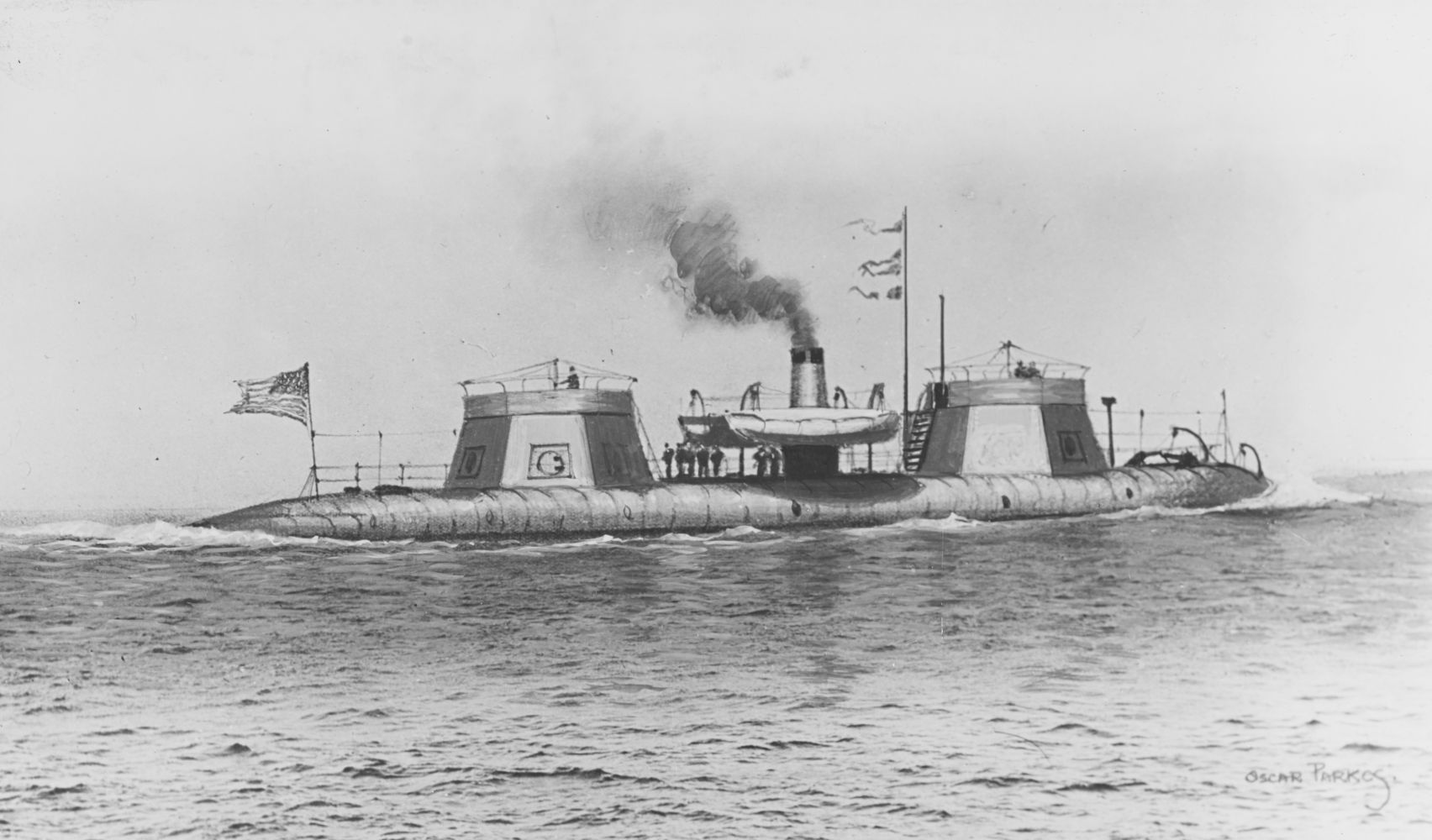
    53k Like most minelayers, Keokuk was named for a Civil War era ship, in this case the short-lived experimental ironclad of the same name (1862-1863). [Note DANFS is incorrect in stating CM-8 was named for the Native American chief/namesake of Keokuk, Iowa].
    Naval History & Heritage Command photo NH 59546, image of 1936 watercolor by Dr. Oscar Parkes
    David Wright
    Prewar Merchant Service
    Keokuk
    11060809
    349k Launching photo from the 27 September 1914 edition of the Bismarck Daily Tribune, Bismarck, ND at the Library of Congress Michael Mohl
    Keokuk
    11060812
    216k Henry M. Flagler moored at the Florida East Coast Railway, Key West Extension, pier at Trumbo Point, during the 1920's.
    Photo from the Monroe County Library Collection from the Florida Keys Public Libraries
    Robert Hurst
    Keokuk
    11060811
    206k Henry M. Flagler at the Florida East Coast Railway, Key West Extension dock at Key West, 13 February 1935. Photo by G.W. Romer, Miami.
    Photo from Florida Keys Public Libraries
    USS Keokuk (CM-8)
    Keokuk
    11060801
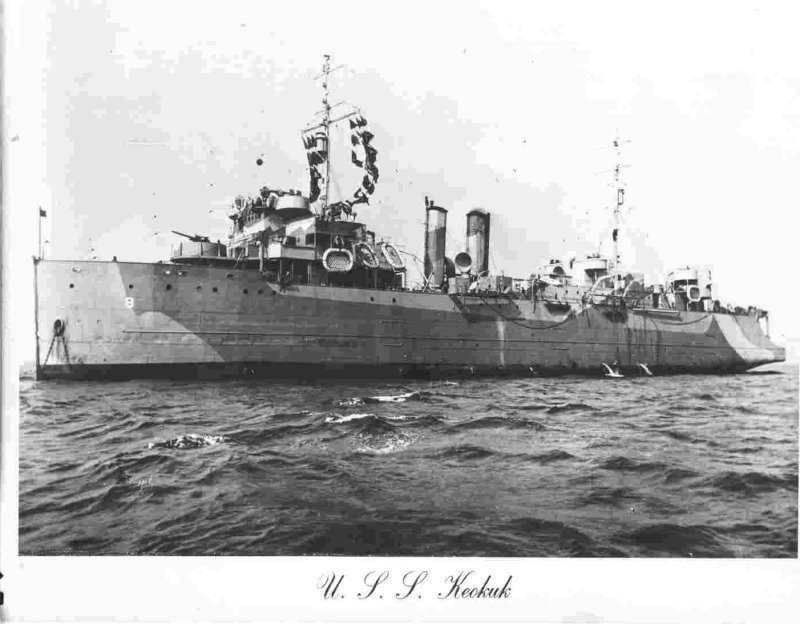
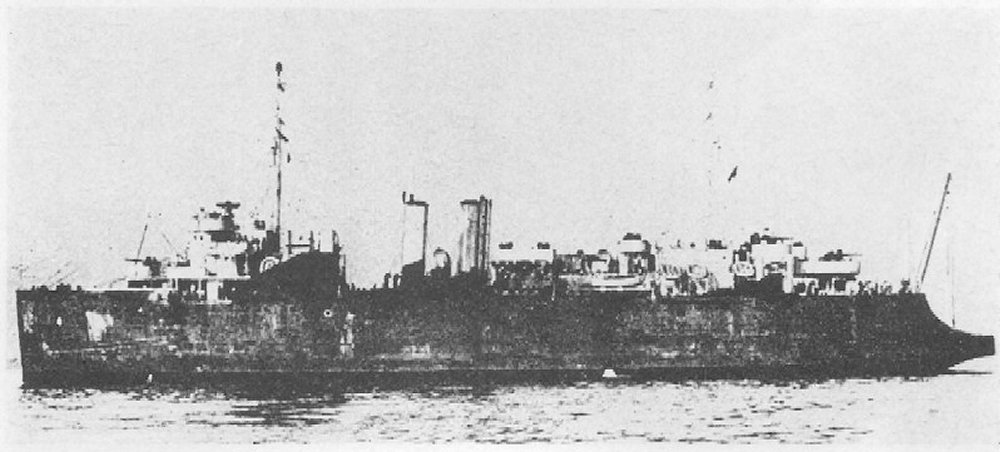
    78k Undated image, circa 1942. John C. Dommerman
    Keokuk
    11060804
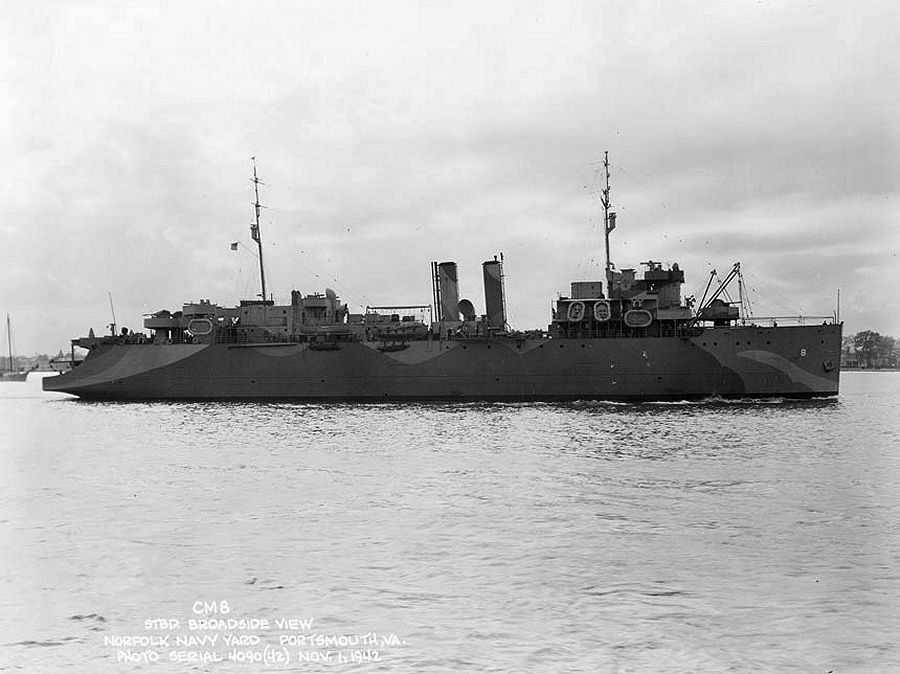
    102k Underway near the Norfolk Navy Yard, 01 November 1942. This ship was reclassified from a net layer (AN-5) to a minelayer (CM-8) in May 1942 but probably underwent no modifications at that time as she had been initially configured for laying both mines and nets.
    National Archives photo 19-N-36498 via Shipscribe
    Robert Hurst
    Keokuk
    11060805
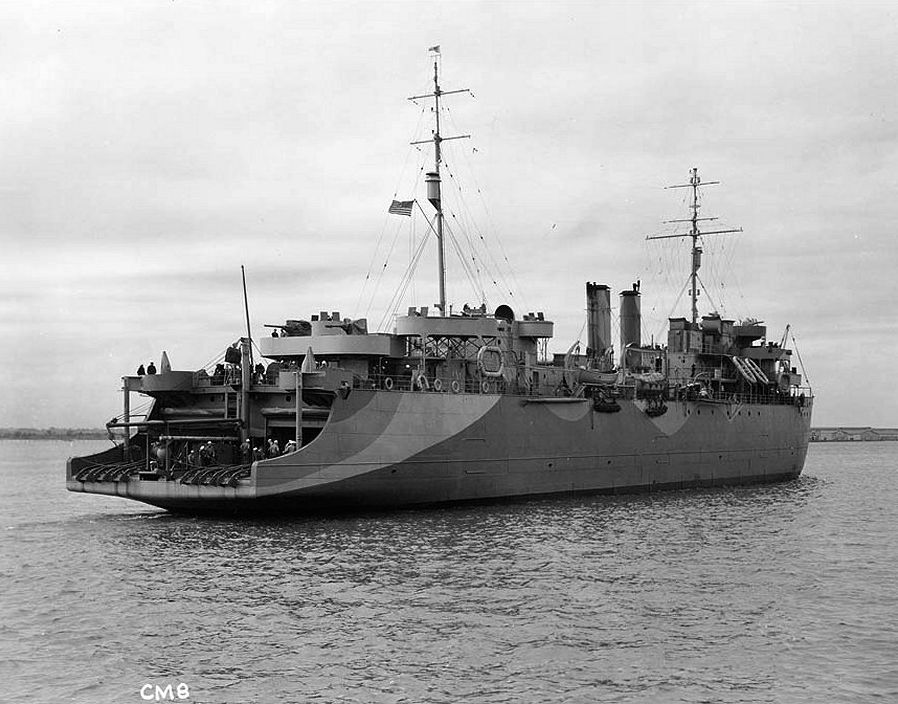
    131k Underway near the Norfolk Navy Yard, 01 November 1942. This stern view shows her mine rails and the short kingpost with its boom between them. The mine rails were portable and could be removed and stowed on board the ship when she was handling nets.
    National Archives photo 19-N-36500 via Shipscribe
    Keokuk
    11060838

    Keokuk
    11060839

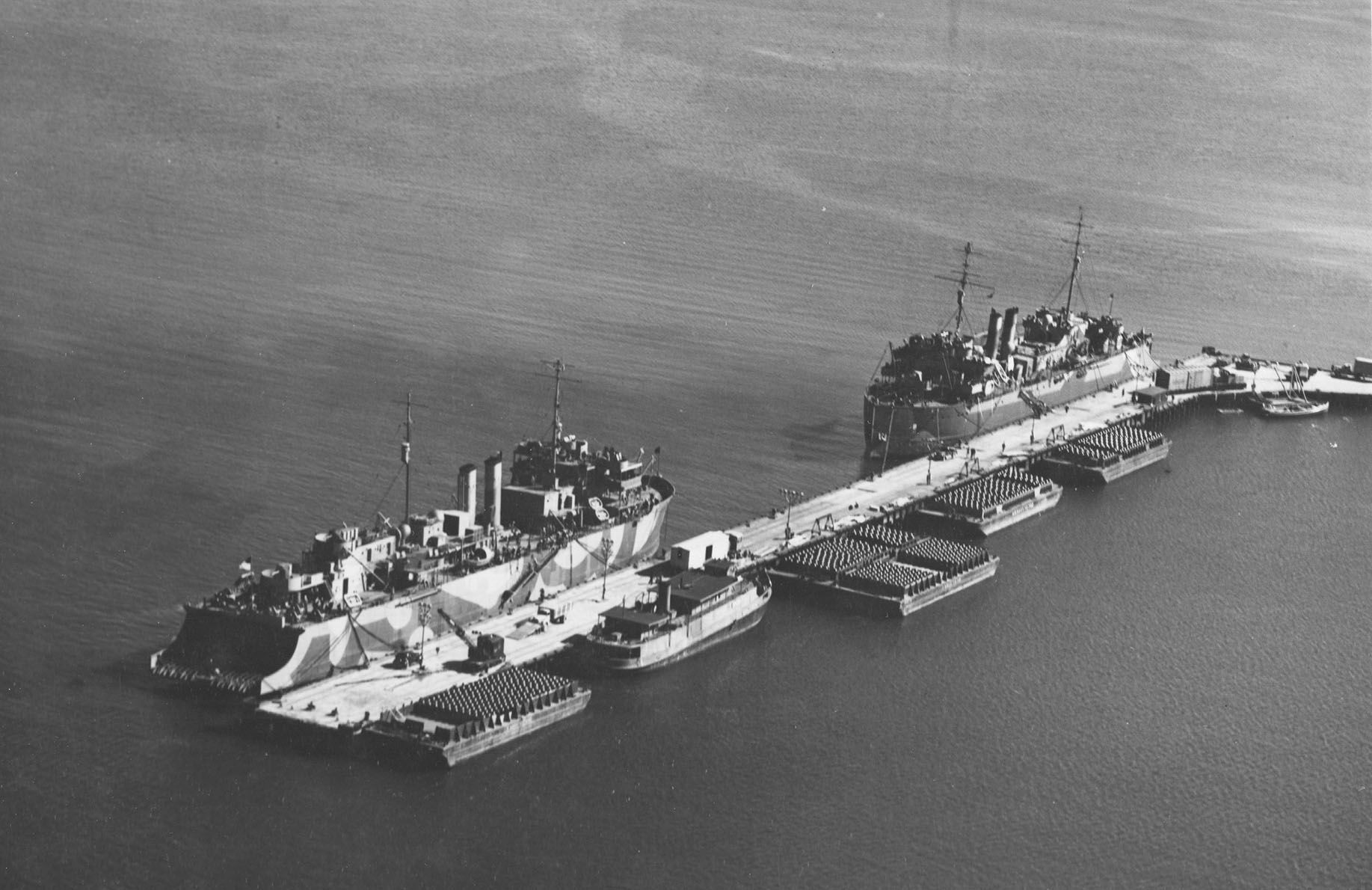
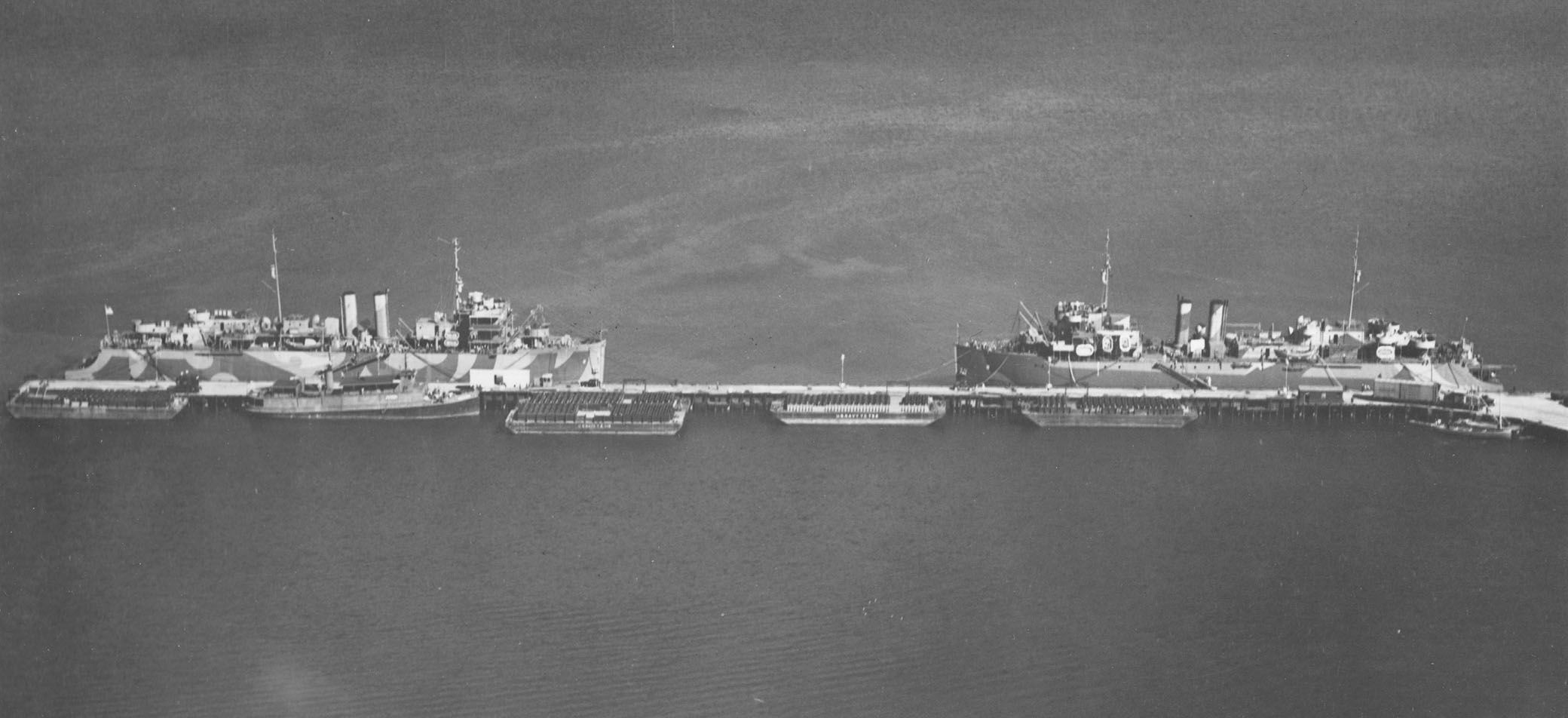
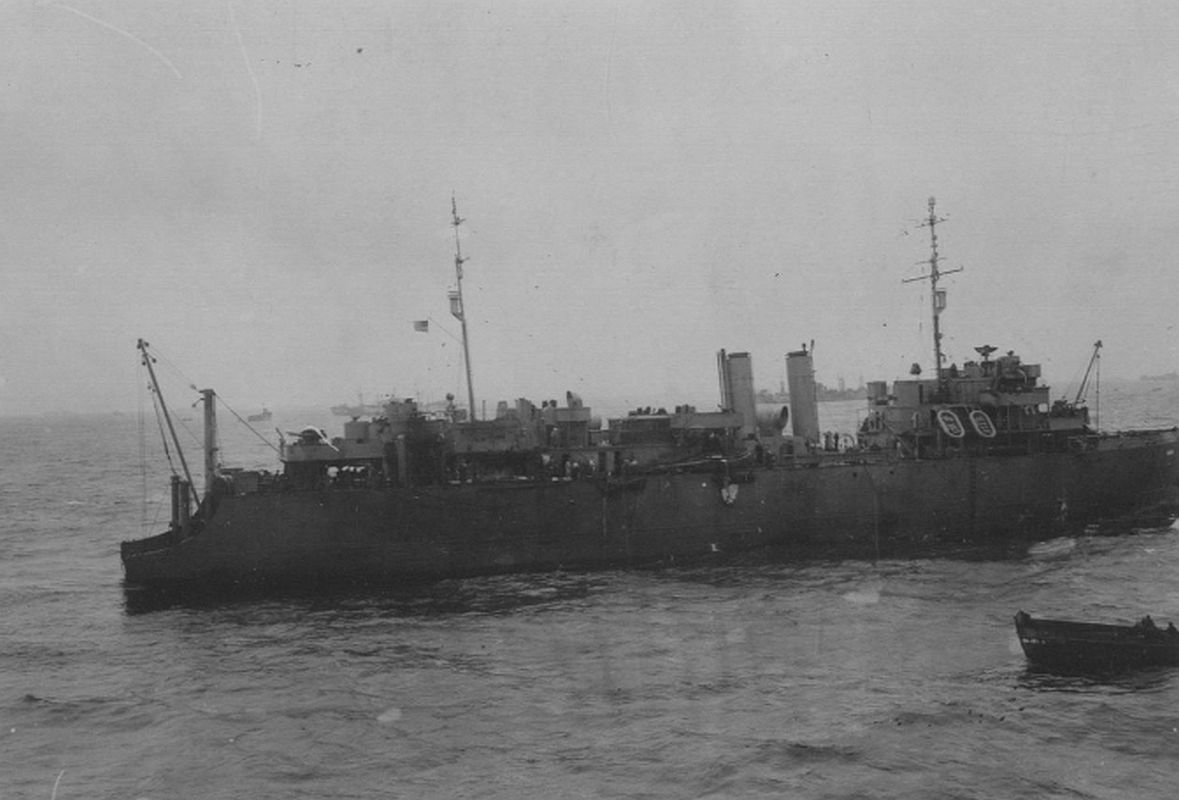
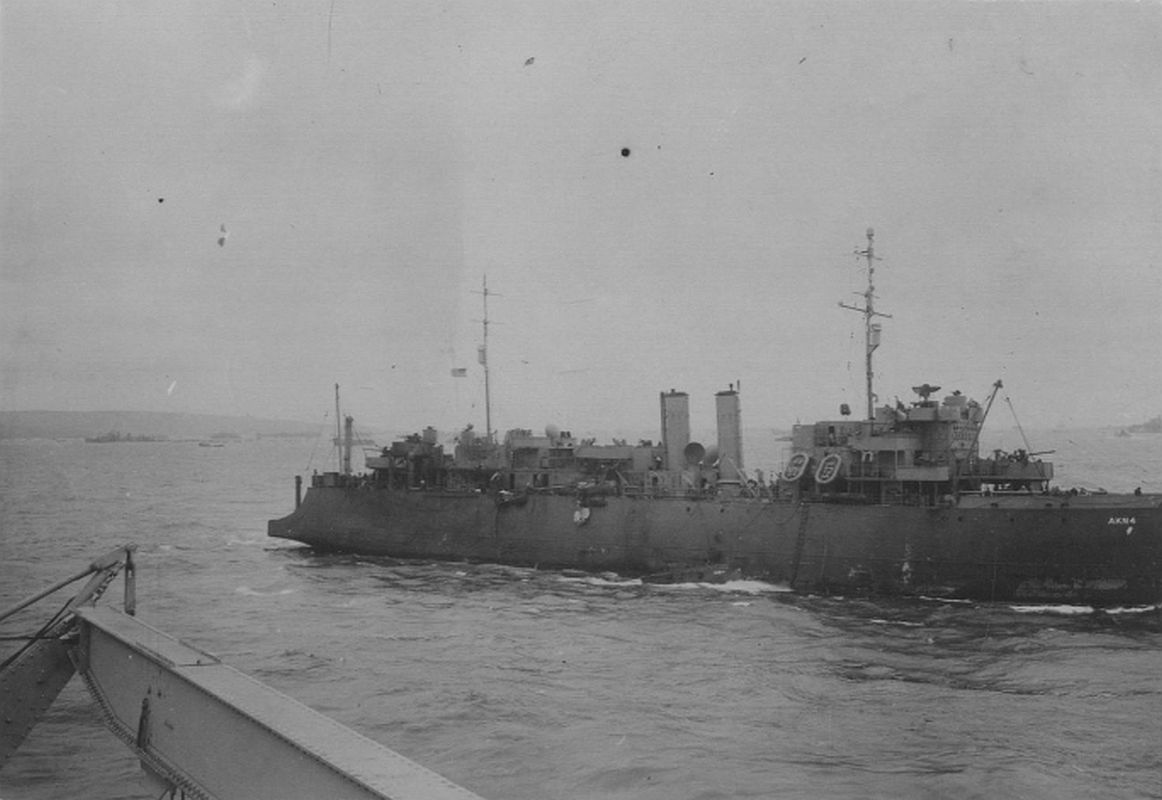
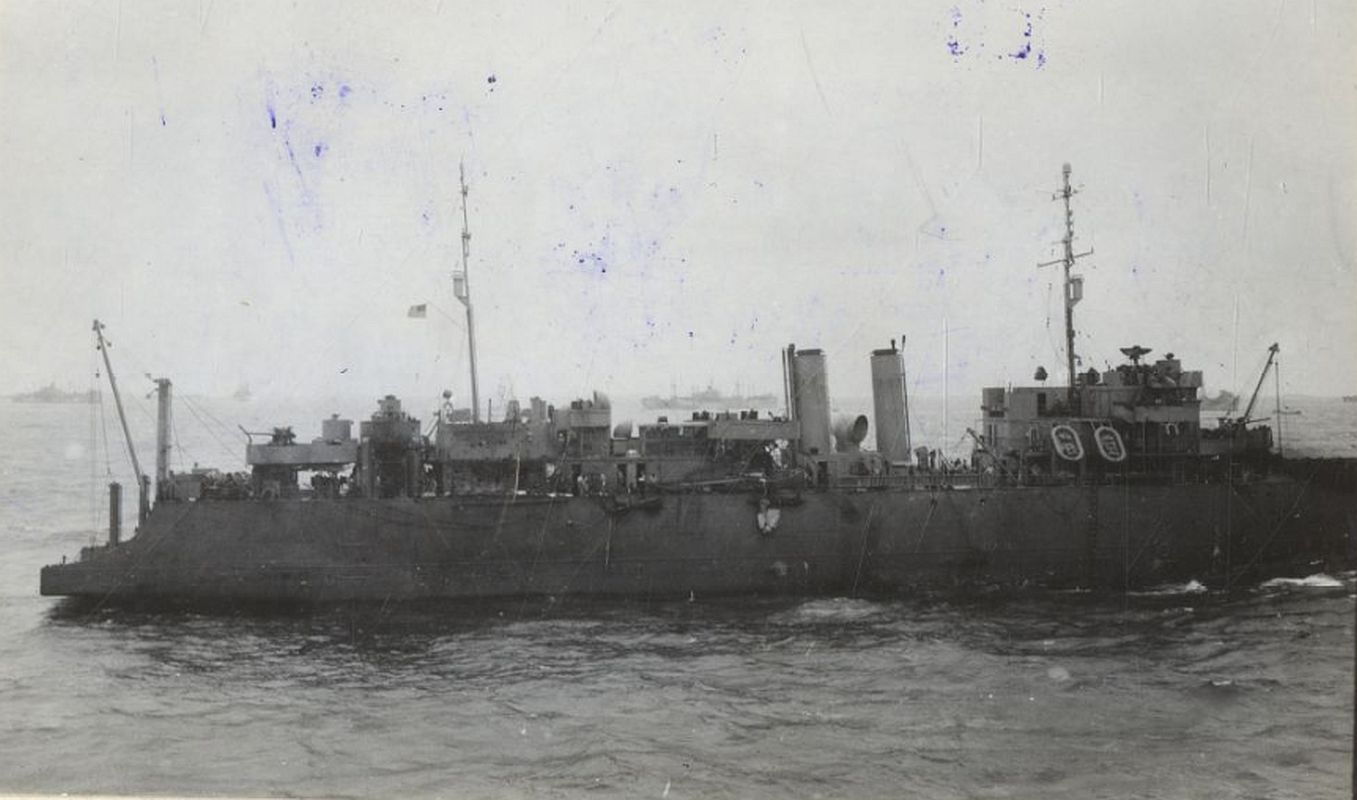
    Two images of Weehawken (CM-12) (left) and Keokuk (AKN-4) (right) moored at the Yorktown Naval Mine Depot, 01 November 1942. The smaller vessel moored across from Weehawken is SS State Port (ON 231501), which arrived 0955 and departed 1510 that day. Keokuk arrived 1150, and Weehawken 1240. Note the several barges loaded with mines.
    National Archives photos 80-G-17495 and -17497

    Tracy White, Researcher @ Large
    USS Keokuk (AKN-4)
    Keokuk
    11060802
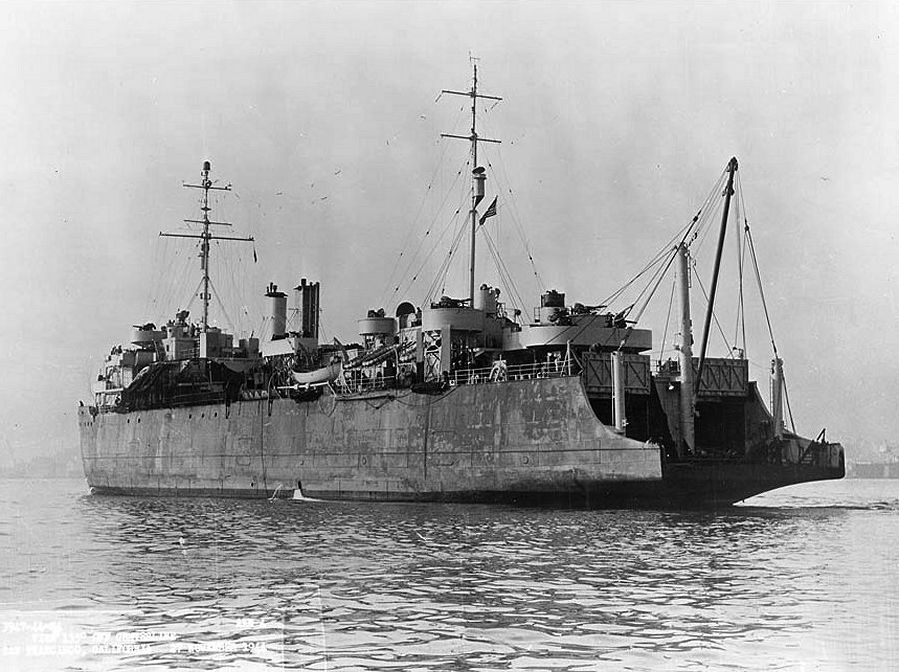
    139k At San Francisco, California, 27 November 1944. Her minimal conversion to a net cargo ship (AKN) in late 1943 appears to have included the enlargement of the two openings in the stern, and the lengthening of the stern kingpost and its boom
    National Archives photo 19-N-81342 via Shipscribe
    Robert Hurst
    Keokuk
    11060803
    76k At San Francisco, 27 November 1944. Robert Hurst
    Keokuk
    11060806
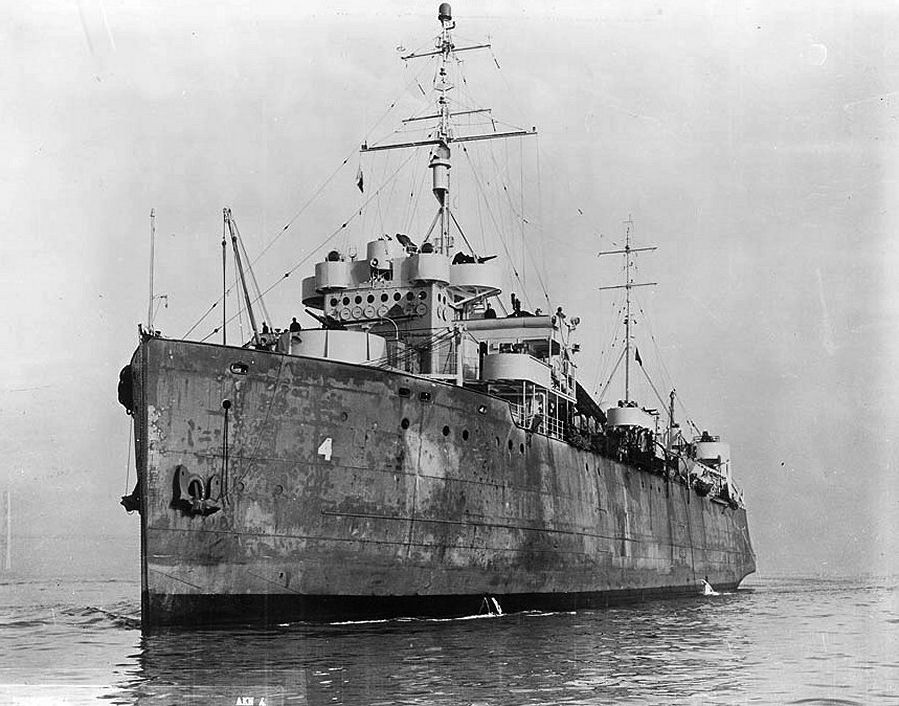
    138k At San Francisco, California, 27 November 1944.
    National Archives photo 19-N-81345 via Shipscribe
    Kamikaze Attack, 21 February 1945

    In the early morning of 21 February 1945, the 2nd Mitate Special Attack Unit sortied from Katori airfield in Chiba Prefecture, Japan. After refueling at Hachijo Jima, the force, consisting of twelve Yokosuka D4Y Suisei (code name :Judy") and eight Nakajima B6N Tenzan (code name "Jill") attacked US forces gathered off Iwo Jima. Heavy cloud cover prevented the CAP over the US fleet from engaging the enemy aircraft, who weren't detected until only 75 miles out. Their most notable successes were the sinking of escort carrier Bismarck Sea (CVE-95) and damging carrier Saratoga (CV-2) badly enough to end her wartime career. Also damaged were escort carrier Lunga Point (CVE-94), LST-477, and Keokuk, as related below.

    During the afternoon of 21 February 1945, Keokuk was cruising in formation with a group of LSTs and net tenders, approximately fifty miles southeast of Iwo Jima in latitude 24° 08' N, longitude 141° 28' E. Keokuk had been cruising in this formation for the past 24 hours, acting as column leader in column one of a three-column formation.

    At 1719, about one hour before sunset, four enemy planes were spotted off the port bow about 4000 yards distant. General Quarters was sounded and word passed that suicide planes were attacking. At 1720 a plane identified as a Jill attacked Keokuk, coming out of the clouds from dead ahead at an altitude of 100 feet at 2000 yards and dropping to about 50 feet at 1000 yard away. Just as the plane was about to hit the bridge it made a left bank, causing the propeller to cut the No. 1 20mm gun shield and gun crew, and the wing to cut the 24 inch searchlight, just forward of the No. 1 20mm gun tub. This contact with the searchlight and gun shield caused the plane to swing to starboard and downward, striking the gig davit amidship, and continuing on aft on the starboard side where a 500 pound bomb exploded on deck outside the sickbay. The plane was hit with 20mm shells from No. 1 and No. 2 20mm guns, and was seen descending upon the ship in flames.

    After the bomb hit the ship, the starboard battery, considting of six 20mm, one 40mm, and one 50 caliber was knocked out of commission; only No. 5 20mm remained in firing condition. A fire was started in the small arms magazine, but was extinguished in time to prevent any further damage. All control and indicating equipment was rendered inoperative from the bridge, and steering shifted to the stering engine room.

    Fires were started on the flying bridge at No. 1 20mm, No. 1 40mm mount, No. 1 40mm clipping room, the starboard motor whaleboat, sickbay, laundry, radio II, motor generator room, 50 caliber magazine, overhead of net deck, as well as gasoline fires on deck from sickbay to the after net winches. Fires were put under control at 1800 and finally put out completely at 1850.

    Before the starboard guns were put out of commission they accounted for another Jill which was attacking an LST off Keokuk's starboard quarter. The pilot of that plane was seen bailing out. This plane and one attacking Keokuk were thus accounted for by Keokuk's gunners. Obsrvers from other ships in the formation confimed this fact.

    The attack was definitely ascertained as a suicide attack. One reason Keokuk was selected as a target was that it appeared to be the largest in the formation. All observations from eyewitnesses agree the attacking aircraft were Jills. Bodies of two pilots, with papers, were found near the after deck winches.

    Total casualities amounted to 15 killed in action, 1 missing in action, and 44 wounded. An additional sailor died aboard Cecil (APA-96) the next day. Keokuk left ocnvoy at 1850 to transfer wounded to Cecil and Hocking (APA-121). Keoikuk laid to off Iwo Jima unti lthe 26th, when she sailed to Saipan for repairs, arriving 02 March. She then sailed to Leyte, arriving 09 March for repairs by Markab (AD-21), whcih were completed 18 March.

    The following damage photos were included as enclosures to Keokuk's Report of AA Action off Iwo JIma, Bonin Islands, 2/21/45, dated 27 February 1945 (serial AKN-4/A2-11/A12 (017):

    Keokuk
    11060828
    80k Looking aft from the starboard bridge wing. Dave Wright
    Keokuk
    11060829
    83k Shrapnel damage to a gun tub. Dave Wright
    Keokuk
    11060830
    46k Damage to a 20mm gun tub. Dave Wright
    Keokuk
    11060831
    86k Internal shrapnel damage. Dave Wright
    Keokuk
    11060832
    94k Impact and shrapnel damage to superstructure. Dave Wright
    Keokuk
    11060833
    93k Blast damage to sickbay. Dave Wright
    Keokuk
    11060834
    86k Blast damage to sickbay. Dave Wright
    Keokuk
    11060835
    140k Impact and shrapnel damage to superstructure. Dave Wright
    Keokuk
    11060836
    84k Looking out through blast hole. Dave Wright
    Keokuk
    11060837
    128k Propeller from kamikaze aircraft that struck ship, a Nakajima B6N Tenzan (code name "Jill"). Dave Wright
    Keokuk
    11060813

    Keokuk
    11060814

    Keokuk
    11060815

    Three images of Keokuk (AKN-4) off Iwo Jima on the morning of 22 February 1945, the day after the kamikaze attack. These photos were taken by ENS Philip N. Bergen, USNR, of the Hocking (APA-121). His ship had taken aboard Keokuk's survivors and wounded.
    National Archives photos 80-G-327386, - 327387, and -327388

    David Wright
    Postwar Merchant Service
    Keokuk
    11060816
    172k Henry M. Flagler underway, probably off Miami in the 1950s. David Wright
    Keokuk
    11060807
    137k Undated image of Flagler, probably during the 1950s. Tommy Trampp
    Keokuk
    11060808
    157k Freight Transporter lying off Miami Beach after hijack attempt by Cuban nationals, 12 July 1967.
    United Press International Telephoto
    Tommy Trampp

    Commanding Officers
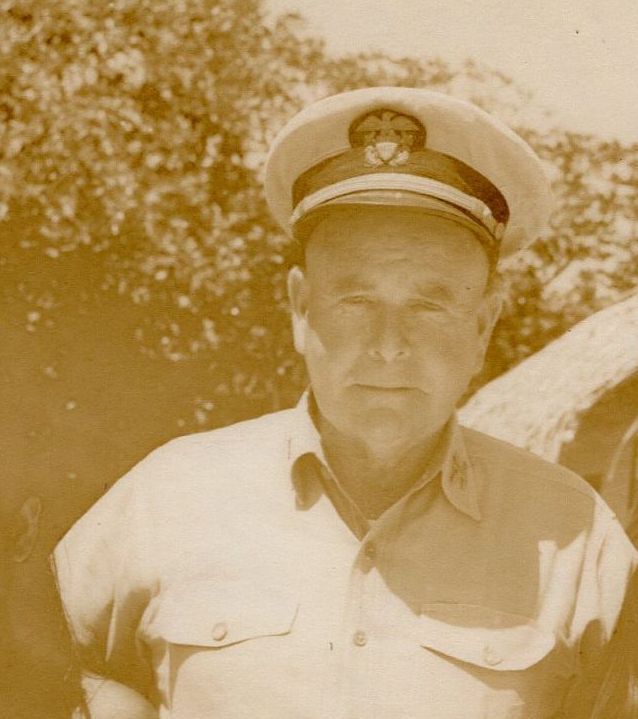
    01CDR Leo Brennan, D-M USNR28 February 1942 - 30 April 1944
    02LCDR John Lewis McLean, D-M USNR30 April 1944 - 10 July 1944
    03CDR Robert Paul Lewis, DEVG USNR10 July 1944 - 01 October 1945
    04LCDR Homer Stafford Porteus, D-VS USNR01 October 1945 - 05 December 1945
    Courtesy of Wolfgang Hechler, Ron Reeves and Joe Radigan

    View the Keokuk (CM 8)
    DANFS history entry located on the Naval History and Heritage Command website
    Back To The Main Photo Index Back To the Mine Warfare Ship Photo Index Back to the Coastal Minelayer (CMc) Photo Index Back to the Minelayer (CM) Photo Index Back to the Auxiliary Ship Index Back To The Net Layer (AN) Photo Index Back To The Net Cargo Ship (AKN) Photo Index

    Comments, Suggestions, E-mail Webmaster

    This page was created by Gary P. Priolo & maintained by Joseph M. Radigan & David L. Wright
    All pages copyright NavSource Naval History
    Last Updated 31 March 2026